Sparkle
A dice roguelike where Farkle meets Balatro. Built with AI agents. Not out yet.
Status, Oct 2, 2026Playable start to finish on a private web build. More pieces are still in review before strangers can play it. Zero outside testers so far.
Farkle, with a roguelike bolted on
Roll six dice. Keep the ones that score. Push your luck for more, or bank what you have before a bad roll wipes the turn. That's Farkle, a bar game older than I am.
Sparkle bolts a roguelike onto it. You climb antes against score targets, buy charms that bend the rules, and face bosses that change the table. Think Balatro, with dice instead of poker hands.
I'm building it the same way I run my businesses. Agents write the code. I make the calls and play every build, and I say no a lot.
How it got here
April 2026
Two prototypes that taught me what not to build.
Felt & Bone was a React page with CSS and emoji for art. Neon Dice Motel was a rebuild in a different direction. Neither one has a screenshot worth showing, which tells you something.
July 5
Restart from zero in Godot.
I picked Godot over Unity and LÖVE for a boring reason that turned out to matter: its scene and script files are plain text, and it runs headless. Binary scene files fight AI-driven editing.
Day one shipped the scoring engine, dice, a shop, ten charms, and a riso-print look we called Print Run.
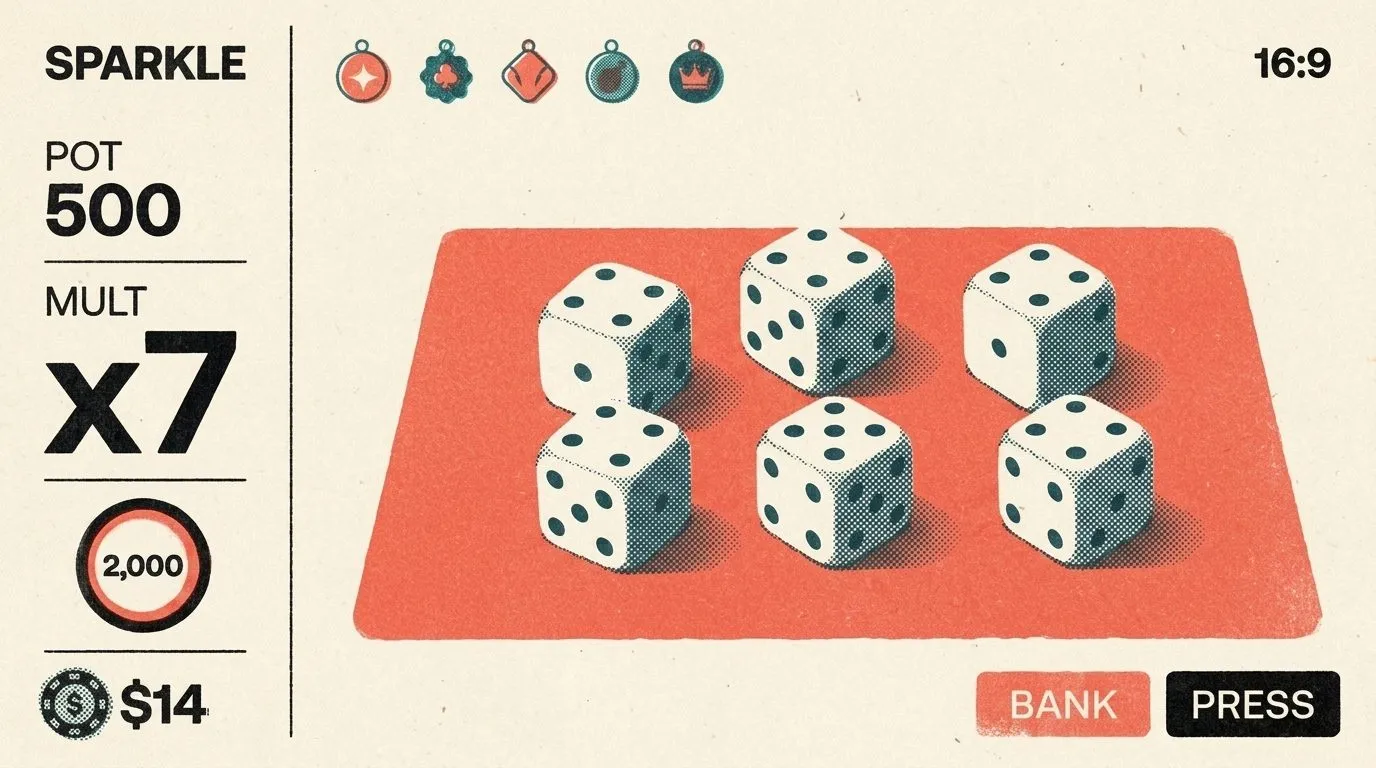
The style target the agents built toward. Jul 5. 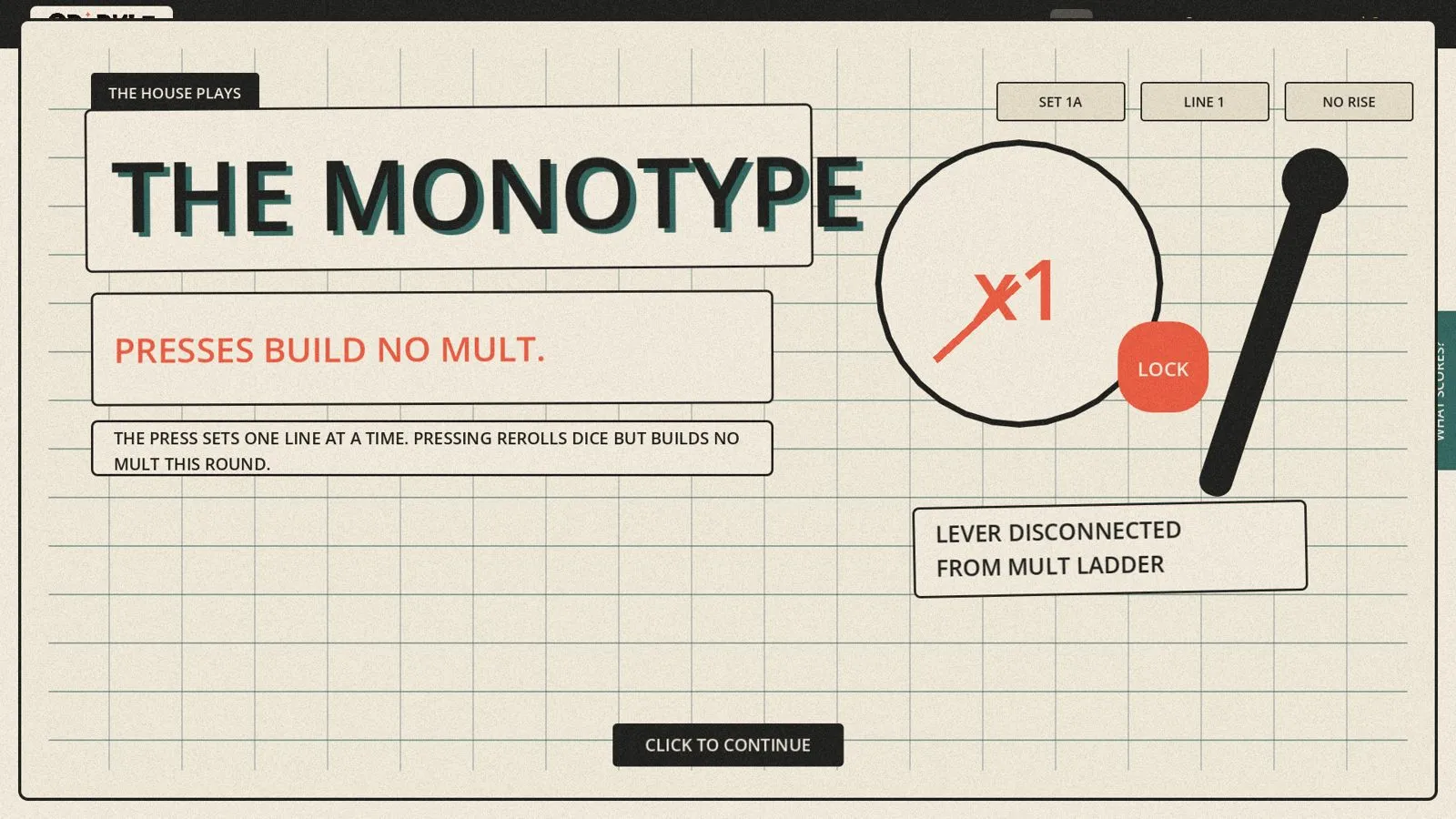
An early boss reveal. Jul 8. July 6 to 9
Content sprint.
Eight bosses, a tutorial, saves, unlocks, a balance simulator, and a charm roster that grew to 46. Desktop builds booted on July 9 and I froze the v0.1 scope.
August
Art and feel.
An image-model bake-off ran 48 images across 5 models for $5.65. The lesson: model choice was not the bottleneck. Every model drifted into the same retro-sticker look, and text leaked into images even when the prompt said no text. So the bosses became code-drawn instead.
Later in August I added a tuning panel with 28 live sliders for one moment, the bank payoff, because that moment has to feel good or nothing else matters.
September 6
I cancelled my own study.
Two AI-built redesigns went head to head. I rejected both as unusable and called it off. No winner.
September 15
The golden build. I rated it a 3.
"Still too easy early." The dice roll sound was bad. The animation was "fine, nothing to wow a player." My note from an earlier pass was shorter: the game lacks motion.
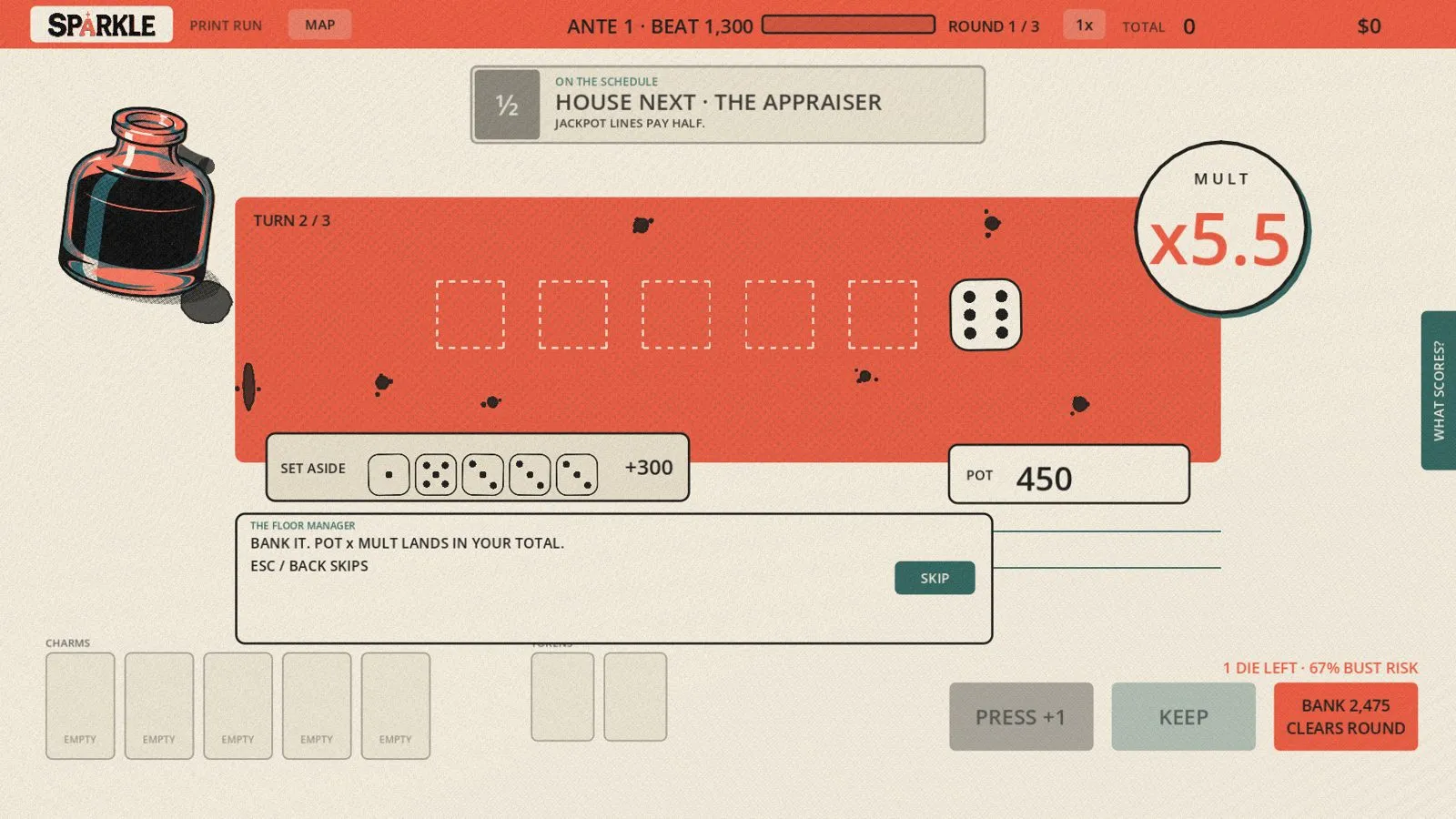
The bank payoff, mid feel pass. Sep 11. Late September
Dice become the star.
I played an angled-dice board in Safari and called it a good start. The dice were out of proportion, so we tested four proportions side by side. I froze the charm-heavy version and made dice the main line.
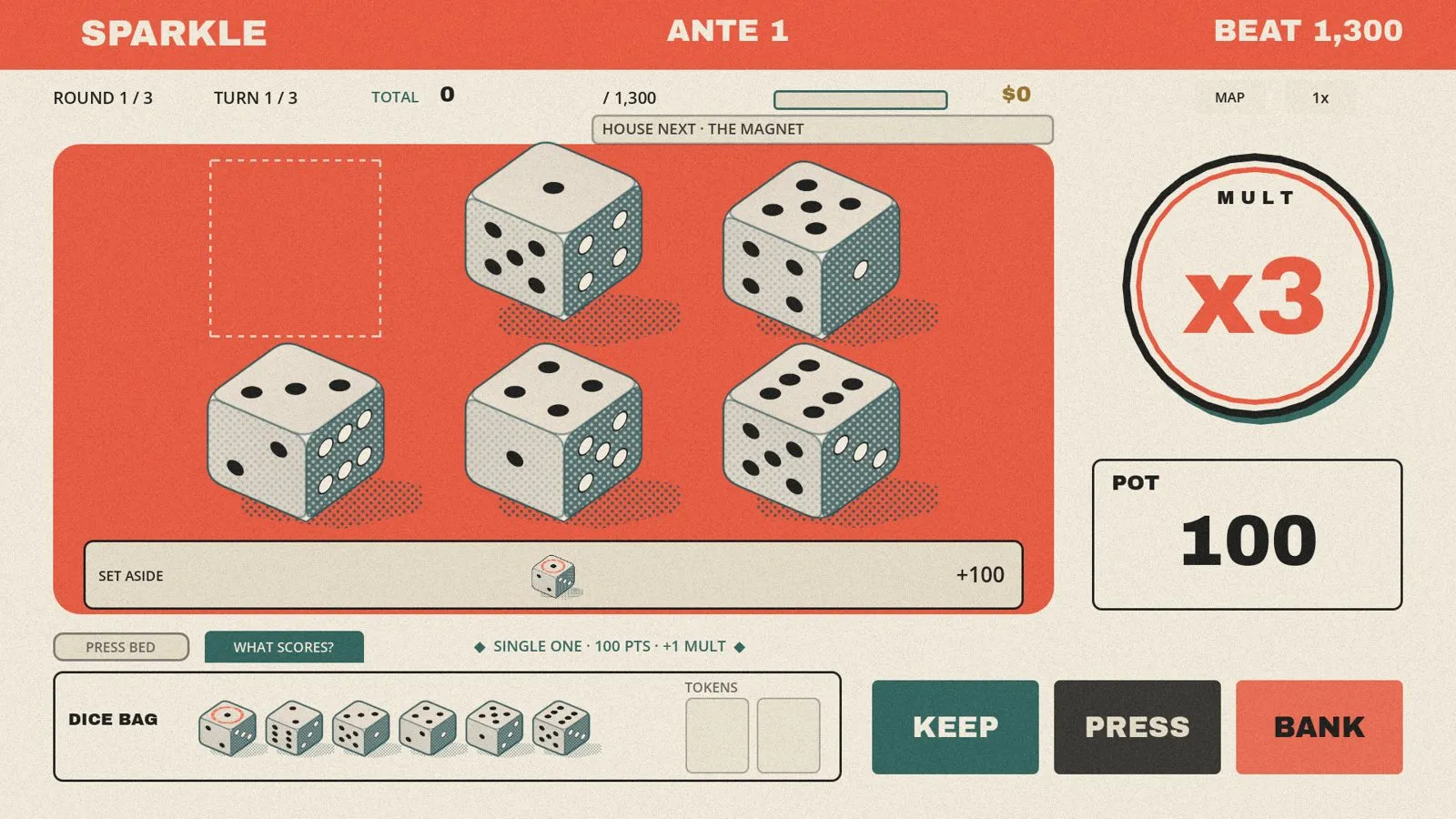
The angled-dice board. Sep 26. 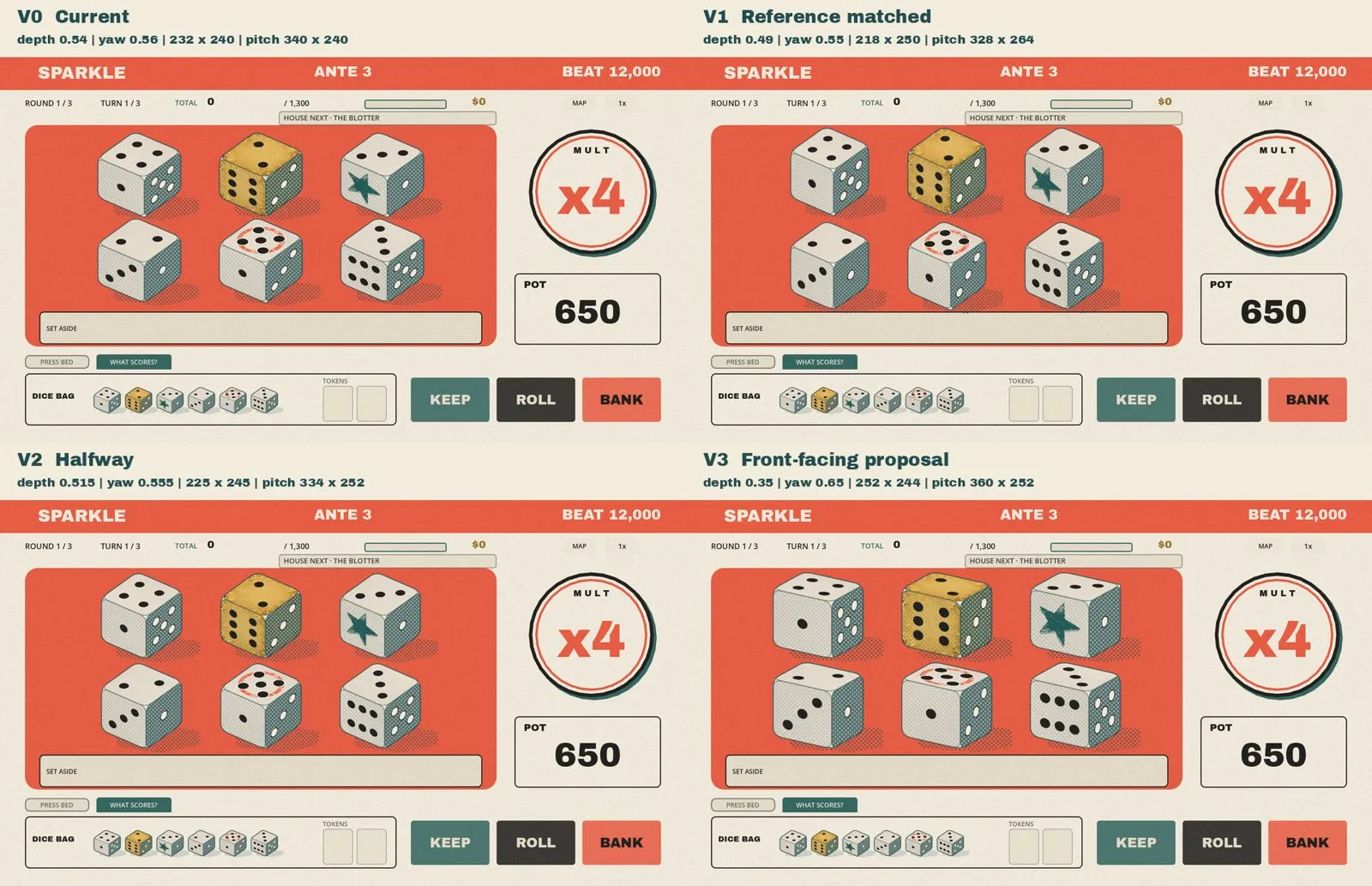
Four dice proportions, side by side. Sep 27. Roll and keep, Sep 24, 2026. Tap to play. September 29
Three directions, one pick.
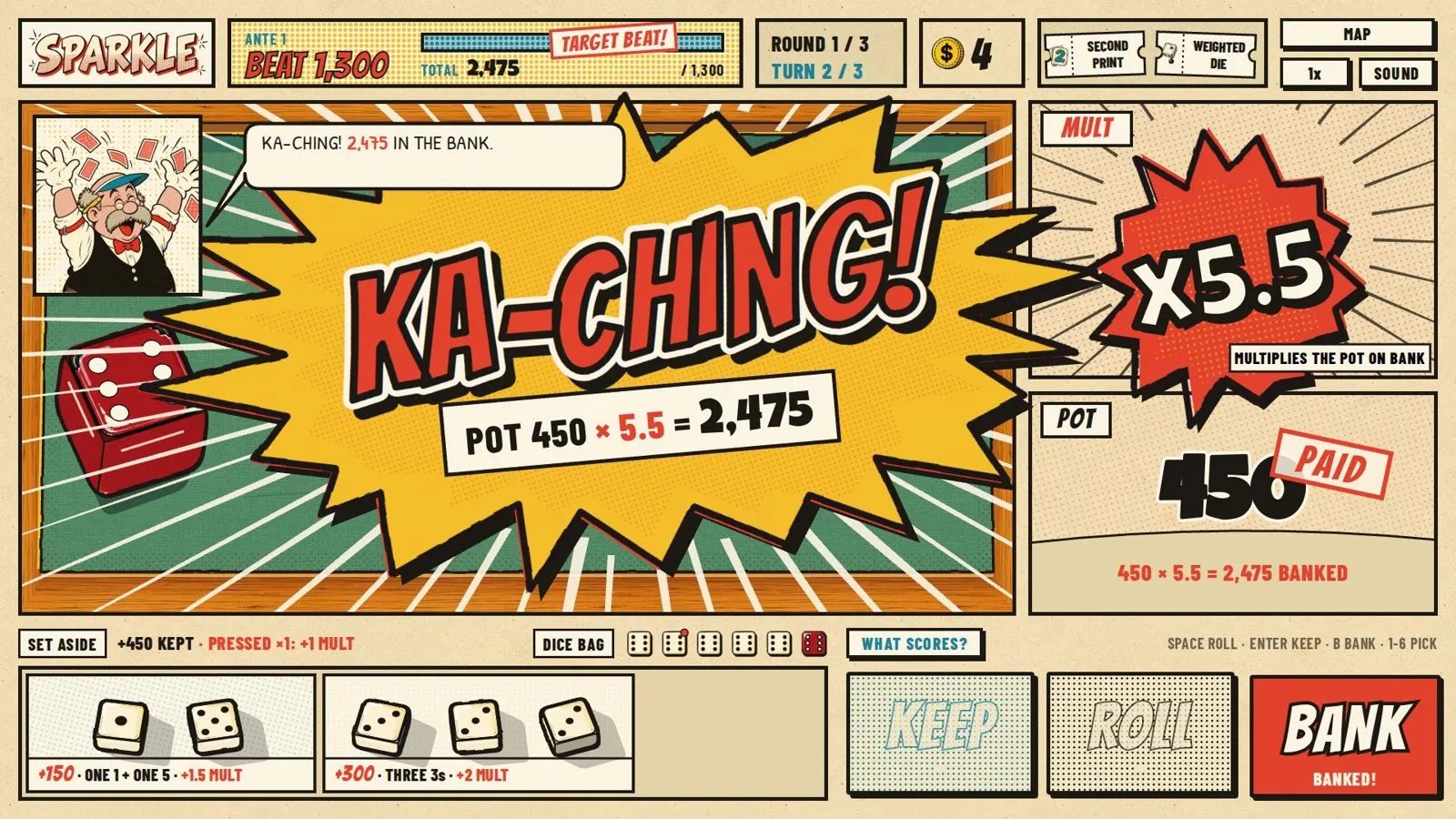
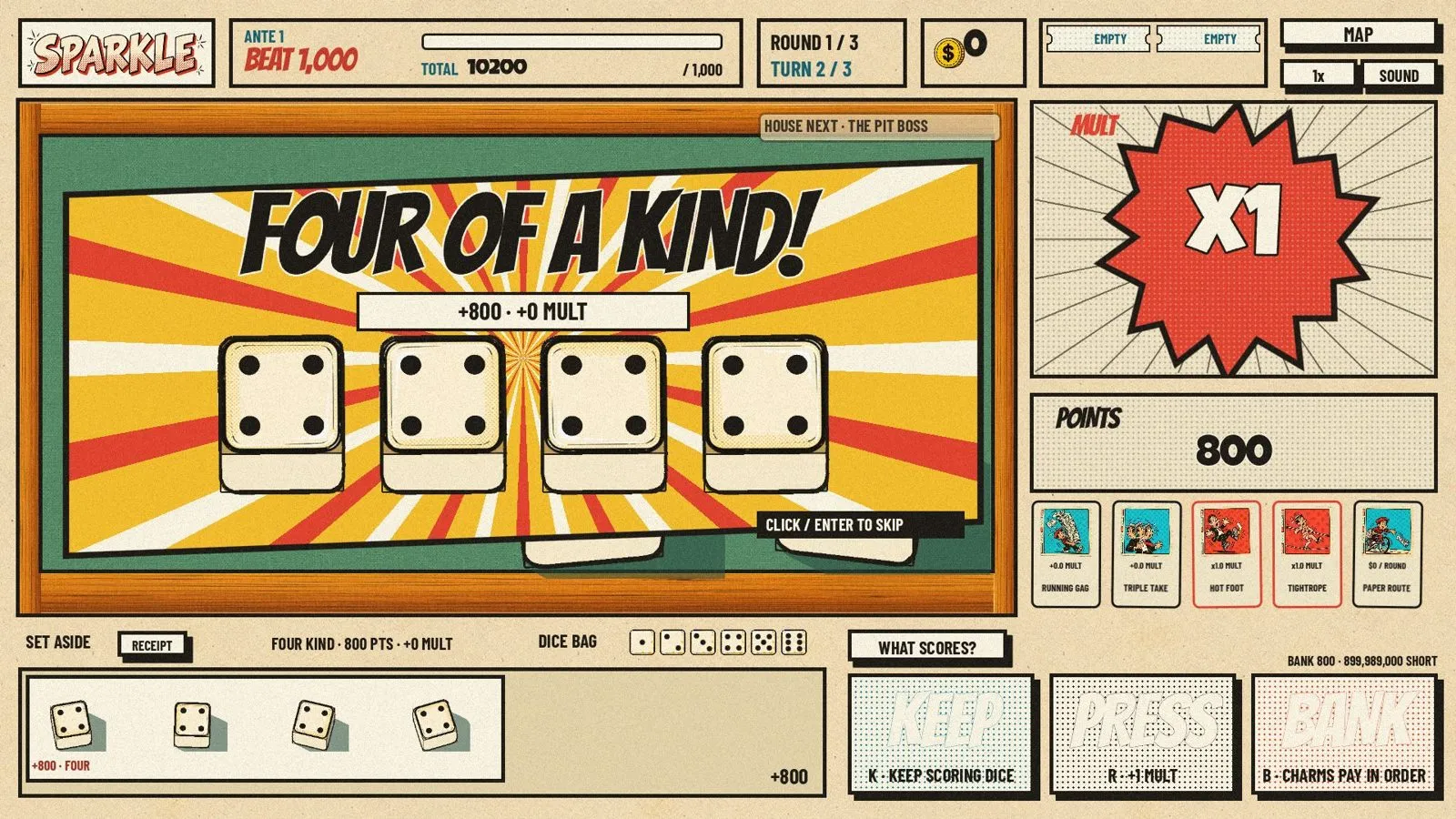
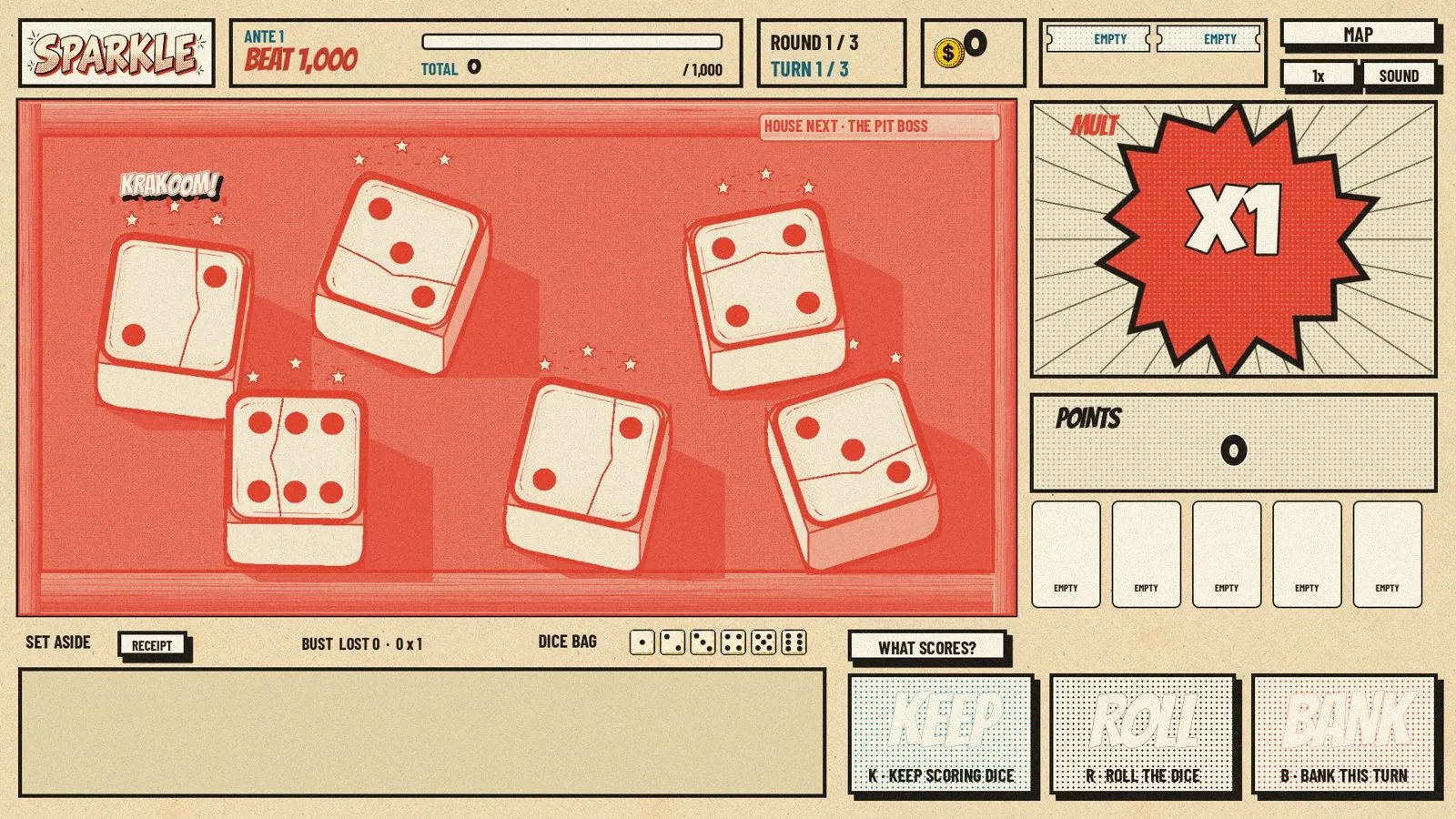
Proof Sheet, Back Room, and Sunday Funnies, all playable. I picked Sunday Funnies, a comic-strip table with KA-CHING bursts and cracked dice on a bust. Print Run retired the next day.
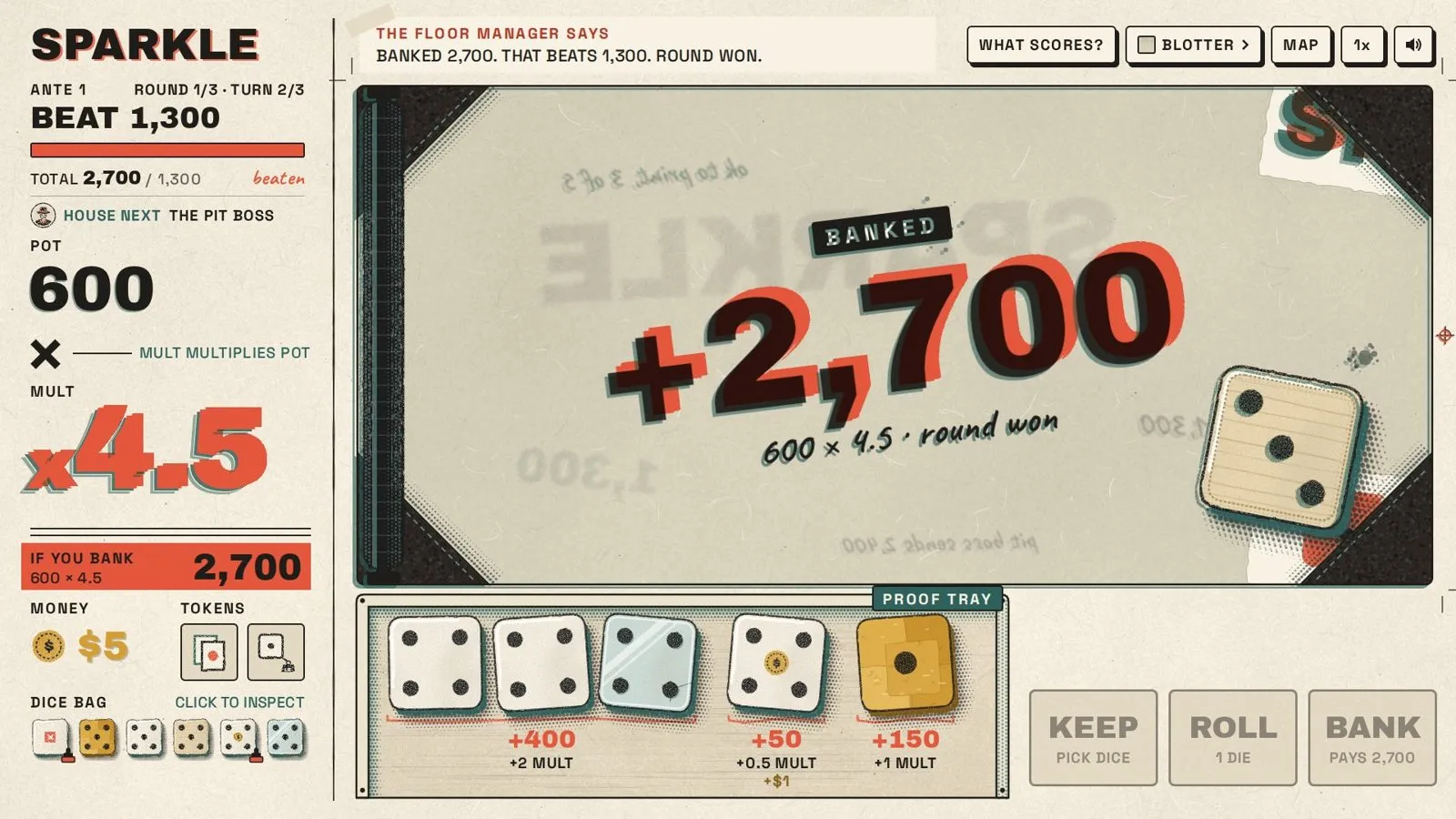
Proof Sheet. 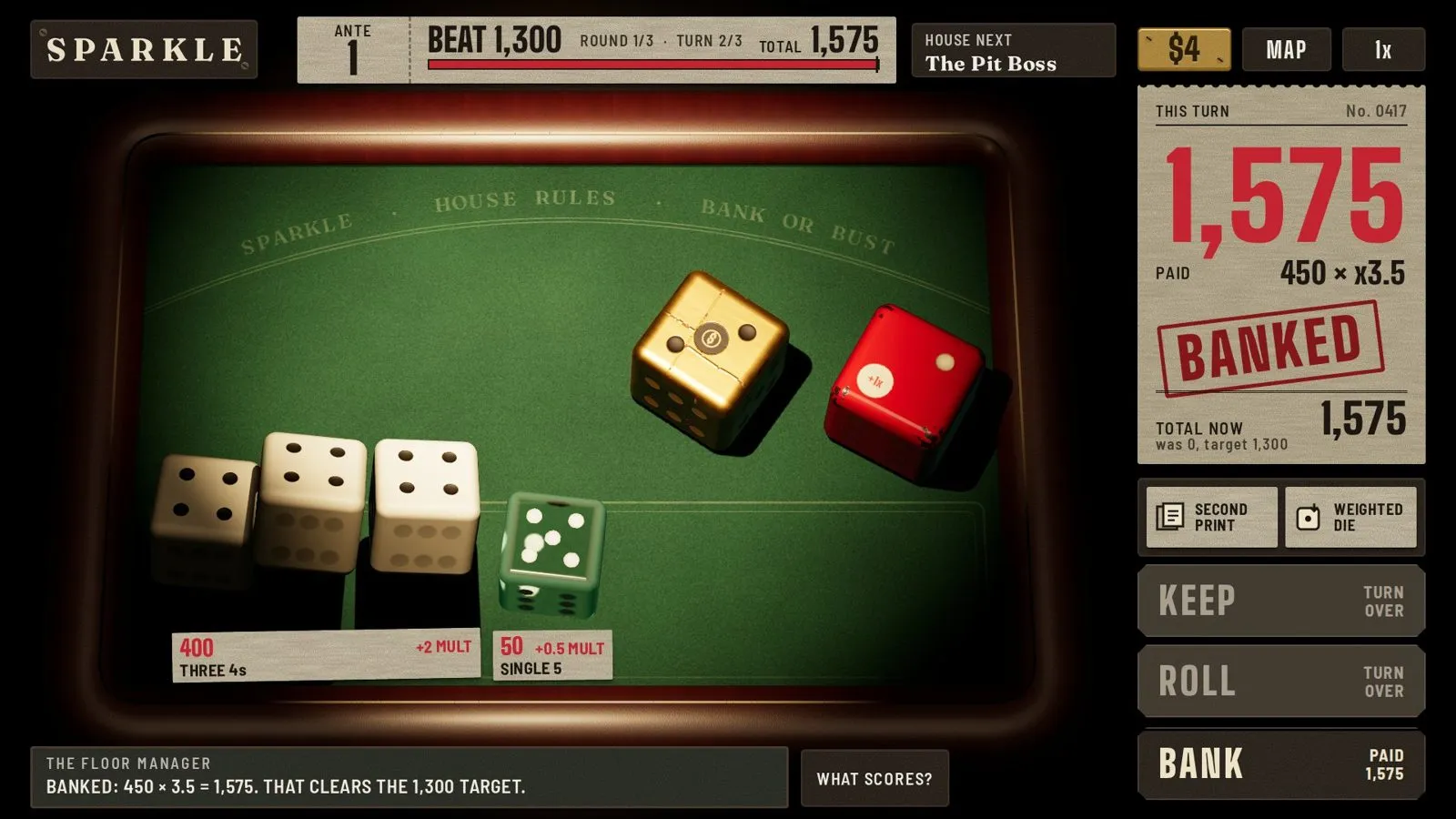
Back Room. Sunday Funnies, the pick. October 1 and 2
Sunday Funnies lands.
The new table, dice, and comic effects merged, and a rebuilt scoring engine is in review now.
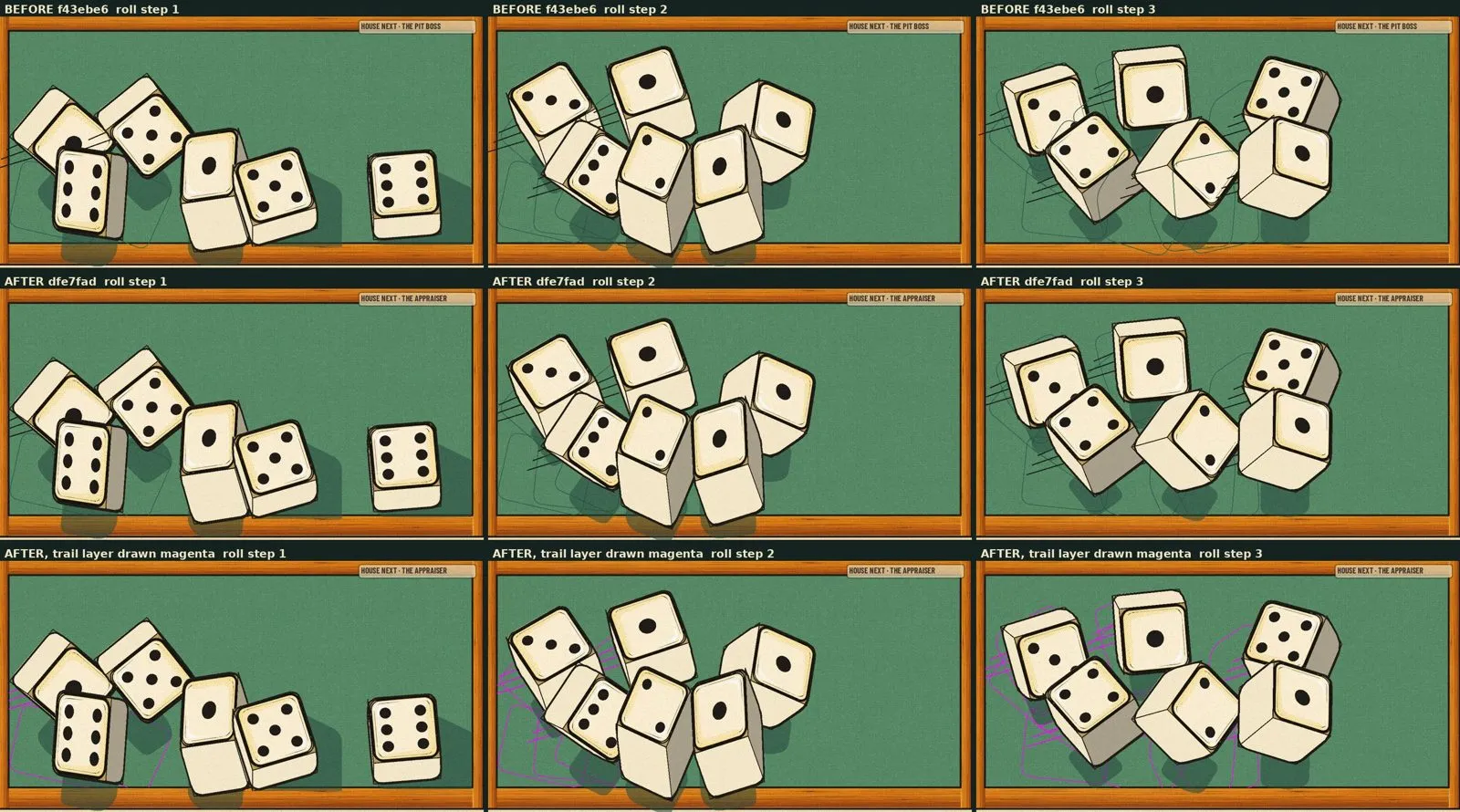
Roll frames, before and after. Sep 30. 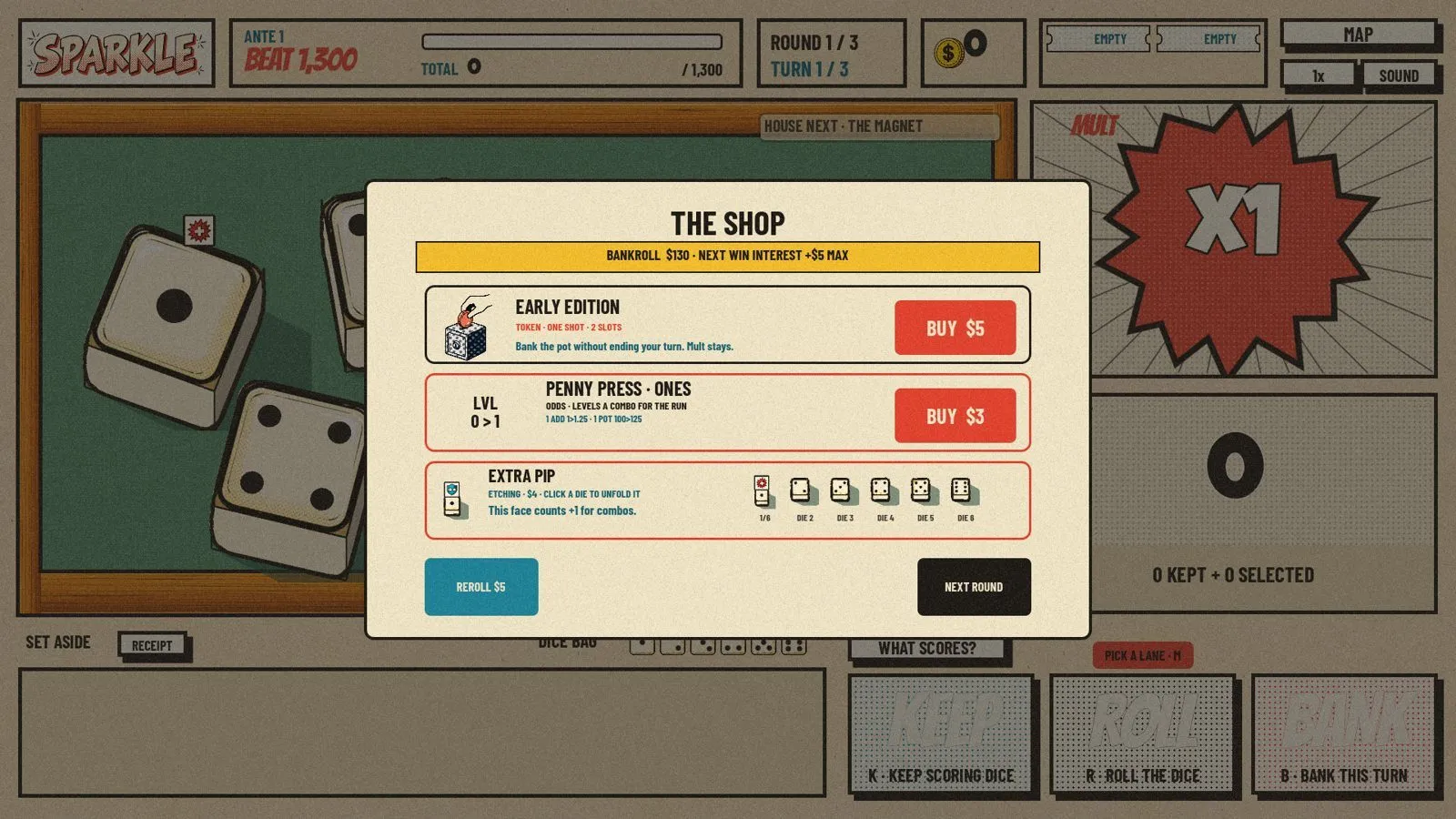
The shop. Oct 1. Four of a kind. Oct 2. A bust. Cracked dice, no points. Oct 2.
A run on the new table
Where it stands
- Playable: a full run on the new Sunday Funnies table, with the new scoring engine.
- In progress as of Oct 2: the tutorial host, round rewards, shop, bosses and run end, menus, and the web and Steam Deck close-out. Several of these are built and waiting on review.
- Not yet: outside playtests, a public build, or a release date. The game's web file is about 36 MB, over Cloudflare Pages' 25 MB file limit, so it needs a different home first.
- The name might change. If it does, that goes here too.
What it taught me
Juice is a requirement, not a polish phase.
The first prototypes saved animation for the end, and the end never came. Now every moment ships with acceptance criteria for how it moves.
A reference image is a spec.
When an agent builds from a design reference, it screenshot-compares against it before calling the work done. Otherwise "close enough" drifts every round.
Green tests can lie.
A bulk find-and-replace deleted 476 lines of the main table script. The logic tests stayed green because they never compiled the scene scripts. Only the smoke test caught it.
Simulation is not a decision.
One study ran 354,300 simulated runs to learn that the method could not rank single charms. The sims answered questions nobody then decided.
Players beat dashboards.
Five testers are lined up. None have played yet. That's the next real gate.
More work
Tap one to pull it open.
01 PDXplorePortland flight deals. Weekly since October 2025, never missed.
6,638 subscribers on Oct 2, 2026. A 53.65% average open rate across 210K sends, as of Sep 19.
Agents
- Collect Portland fares every day and flag deals against 90-day price baselines.
- Live-check about 15 deals a week against Google Flights before a reader sees one.
- Draft the newsletter and render the Instagram slides.
Me
Stage and send every issue. Approve every caption, post, and ad over coffee.

02 Park BanterA national parks newsletter plus paid campsite alerts. Launched August 2026.
The campsite watch runs 24/7. Issue 1 went out Aug 6, 2026, and alerts went on sale Aug 20.
Agents
- Pull park news every day.
- Draft the newsletter every Wednesday at 6pm Pacific, with a fact-check, photos, and a review page.
- Check campsite availability around the clock for every active alert.
Me
Stage and send every issue. Approve every post, ad, price change, and new spend.




05Shut down Couve CultureA local events newsletter. Shut down in July 2026.
Grew to 11,000 subscribers across 34 editions, February to October 2025. It never found a business model.
Agents
- An n8n workflow pulled local events out of Instagram posts.
- Drafts followed written formatting instructions for an LLM.
Me
Made the call to close it, then wrote up why.